
New SBTi update proposal: more operationality but less rigor?
Analysis of the SBTi proposal
Last month, the Science Based Targets initiative (SBTi) published the second version of its draft for the future revision of the standard. This update was eagerly awaited, both by companies already committed to the SBTi framework and by companies seeking to develop or validate their climate strategy. The new text further entrenches the SBTi in a narrow vision of climate transition: more flexible, focused on certain levers for action, but also potentially less holistic.
This article offers a factual analysis of the main changes, highlighting the limitations in order to structure a debate and provide initial insights for companies.
A methodological shift: towards a carbon intensity and activity-based approach
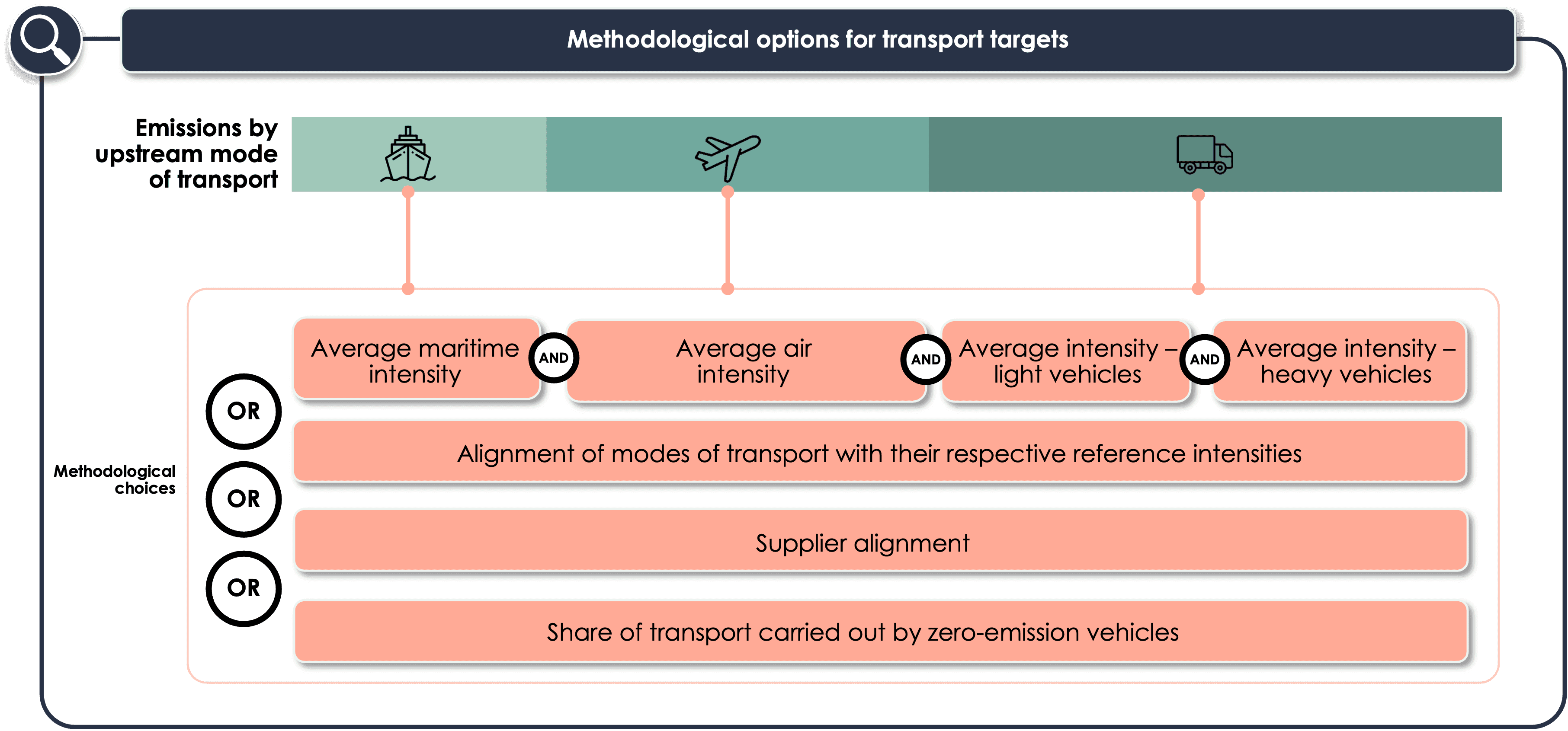
The general philosophy of draft v2 is now based on an activity-based approach, rather than a scientific approach based on compliance with the carbon budgets provided by the IPCC. For example, for freight transport activities, the standard proposes setting intensity targets for each mode of transport (air, sea, road, rail), effectively removing the essential lever of modal shift. This change aims to make the standard more operational by studying concrete actions by activity. However, it overlooks the fact that any low-carbon scenario for 2050 does not reflect the relative weight of today's activities in a low-carbon version. To take the example of transport again, by looking at air and maritime transport in a segmented way, the SBTi proposal effectively obscures one of the main levers for action, which is the shift from the former to the latter.
The necessary climate transition invites us to rethink human activities and prioritize certain activities over others. This reflection must be at the heart of a climate strategy if it is to be relevant. The work of the IF initiative, funded by a panel of companies, aims precisely to involve private actors in the reflection on different climate scenarios involving human activities with contrasting developments. This ultimately enables companies to anticipate their role and potential contribution in these different futures.
Furthermore, in this SBTi proposal, companies are encouraged to set intensity targets. (or other types of targets that ultimately amount to an intensity-based approach). The SBTi disregards considerations of total emissions volume as long as the carbon intensity of activities meets certain criteria. However, science tells us that what causes climate change is precisely the total volume of greenhouse gases stored in the atmosphere, requiring society to adopt a carbon budget approach, which is not well represented in this latest version of the SBTi.
Intensity-based reasoning opens the door to the rebound effect: history shows us that progress in energy intensity always translates into increased volumes, which negates progress in intensity.
Scope 1: more granularity, fewer absolute constraints
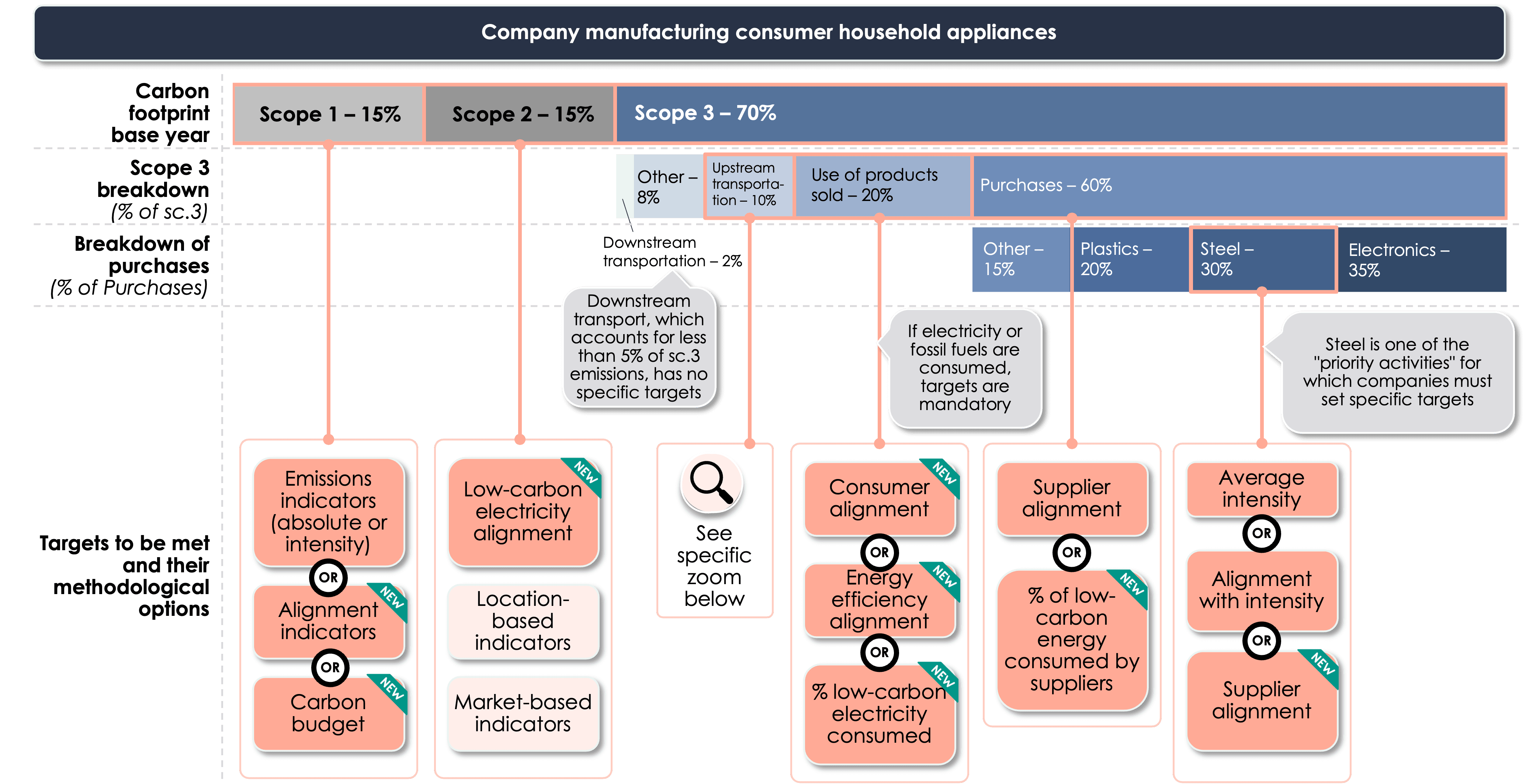
The new draft proposes a highly detailed approach for Scope 1, distinguishing between different types of activities and incorporating targets by lever of action. Among the new features:
Three possible methods:
- Absolute or intensity emissions indicators
- (New) Alignment indicators
- CO2e emissions are no longer tracked, but rather the percentage of low-emission activities[1]
- Example: % of electrification of the electric vehicle fleet
- (New) Decarbonization of assets by adhering to a carbon budget Allows for tracking of non-linear reductions in stages Example: a coal-fired power plant that is planned to be converted to biomass. Emissions are significantly reduced in the year of conversion (this is referred to as a step). The conversion date must be set to ensure that cumulative emissions up to 2050 comply with the carbon budget defined by the SBTi.
We welcome the carbon budget approach for assets that are decarbonizing in stages, as it allows us to get closer to the operational reality of decarbonizing certain assets.
However, while the alignment approach avoids carbon accounting issues and provides guidance to companies on certain actions, it no longer encourages companies to study the volume of energy consumed, but only the nature of that energy. This significantly limits the scope of decarbonization levers.
Scope 2: rise of Guarantees of Origin, energy efficiency overlooked
For electricity, the SBTi:
- makes it optional to achieve targets expressed in tCO2e, whether modeled using a location-based or market-based approach.
- now requires a percentage of "low-carbon" electricity (≤ 0.024 kg CO₂/kWh), which must increase linearly until it reaches 100% in 2040.
This reorientation strongly encourages the use of GOs and obscures the debate on energy efficiency or consumption reduction.
However, safeguards are in place: strict spatial criteria, possible exclusion of areas without a GO system, and the gradual introduction of hourly consistency between 2030 and 2040.
This approach, which could facilitate the growth of the GO market, is in line with Carbone 4's recommendations. We provide operational support to several companies in implementing a relevant and impactful GO purchasing strategy.
However, as with Scope 1, while reducing carbon intensity is a key issue, it must be complemented by controlling or even reducing energy consumption. With the development of new electrical uses (electric transport, electrification of industry, new digital uses, etc.), competition for access to low-carbon electricity will increase, requiring serious consideration of energy efficiency and priorities for access to this resource.
Scope 3: generalization of intensity targets
Scope 3 is undergoing major changes. SBTi v2 proposes:
- A segmented approach based on activities considered to be intensive (e.g., cement, steel, air transport, road transport, construction, etc.);
- The generalization of intensity targets, with four main possible methods:
- average intensity target for the activity or category;
- alignment rate target for the activity in relation to the defined intensity;
- alignment of suppliers or end users;
- target percentage of low-carbon energy consumed by suppliers in the value chain and/or end users;
- the decline of absolute targets, relegated to the last option;
This approach encourages relative decarbonization (per unit produced, transported, or sold) rather than an absolute reduction in emissions. It does not guarantee a reduction in emissions in absolute terms.
Finally, the SBTi allows for a few exclusions from the scope of the commitment: second-hand products, commuting, certain asset categories, uncontrolled franchises, etc.
Guarantees of Origin: a central role, but a risk of dependency
Draft v2 includes GOs as a major element in reducing emissions for scopes 2 and 3. Two types of GOs are recognized:
- those consumed by suppliers, which can be taken into account in the company's indirect emissions;
- those implemented by suppliers, potentially paving the way for recognized Book & Claim systems[2].
This approach could boost the market, provided that eligibility criteria are strict and the reliability of certificates is assured.
While it is possible to define strict criteria, ensuring the reliability of certificates is much less so, particularly in an international context that is not always conducive to the implementation of decarbonization solutions. It should also be noted that the implementation of such a system—which is very complex in practice—for all so-called intensive commodities is likely to require significant financial and human resources, with varied and complex impacts, while also taking a certain amount of time to implement.
Examples of possible objectives for a manufacturer of consumer household appliances
General analysis: what are the challenges behind these developments?
Limitations identified
A decline in scientific rigor
The shift from an absolute carbon budget approach to an intensity-based approach poses a significant risk to maintaining our overall carbon trajectory.
A lack of holistic vision
The SBTi wanted to promote a more operational approach but selected a set of levers for action that do not allow us to think about, let alone prepare for, structural changes in our society and business models.
Increased dependence on Guarantees of Origin
These are becoming a pillar of the trajectories. The relevance of this approach will depend largely on the ability to implement eligibility criteria, verify their application, and ensure the development of sufficient volumes of low-carbon electricity.
A complex architecture that is difficult to implement
By breaking down activities into so-called intensive activities and seeking to scale up certain actions, the preparation for SBTi validation is likely to become more laborious.
Positive points and opportunities
A more flexible methodology for hesitant companies
This flexibility could revive SBTi commitments or resubmissions, which are currently slowing down.
Potential development of more reliable EAC[3]ƒs markets
With strict criteria, this could encourage the development of low-carbon energy and commodities.
- A pragmatic approach in response to the difficulties encountered by companies
Next steps: what next for the SBTi and for companies?
- Consultation open until December 12.
- Revision of the draft based on feedback.
- Final publication expected in 2026.
Carbone 4 continues to analyze the draft revision in detail and anticipate the consequences for companies in various sectors. Please feel free to contact us for an analysis and personalized recommendations tailored to your specific challenges.
Carbone 4's Net Zero Initiative approach for businesses remains a scientifically robust methodological framework that is demanding in terms of the scale of the efforts required, guiding companies in controlling their environmental impact and contributing to global carbon neutrality.
Other resources that might interest you




























































Contact us
Contact us about any question you have about Carbone 4, or for a request for specific assistance.